Monday, August 18, 2008

Stormy Weather: Guest Protection During Hurricane Season


With Tropical Storm Fay almost upon us in Florida, CSA Travel Assurance company suggests the following preparations for travel during hurricane season.

1. Check with the property manager before booking to determine what type of policy is offered during your stay in the event of a storm. Is there a "hurricane guarantee" or other policy that will guarantee a refund of the cost of your stay, as well as any potential property damage if you are forced to cancel or evacuate due to a hurricane?

2. Stay up-to-date on weather in the region to which you are traveling to be aware of any events that could hamper your arrival or cause an interruption in your stay.

3. Once arriving at the property, double-check the property's policies and procedures.

4. If a storm approaches and an evacuation is ordered, secure a hurricane claim form before you evacuate.

5. During the evacuation, listen to radio reports of any evacuation lift or other instructions.

6. Save all your receipts to facilitate possible reimbursement when and if the unplanned occurs.

7. Once evacuation is lifted, you may need to return to the rental property. Read your policy details carefully beforehand.

Owners and guests can now benefit from the protection of insurance for security deposits, hurricanes and identity theft. Policies are available to cover damages.

Even if the hurricane doesn't hit your area, you should be prepared for inconveniences including extended power outages. Charge laptops, mobile phones and iPods and have car chargers handy. Fill prescriptions in advance in case delivery service or power outages delay access to pharmacies. CSA suggests, "anticipating the unanticipated," including travel delays.

Fly and Still Go Green?


Environmental groups say people need to fly less. Sites like Carbon Responsible can calculate the footprint of your trip, plus show you how long it takes to make the equivalent carbon saving by cutting down on car journeys or using low-energy light bulbs. My recent flight from Florida to Arizona has the same impact as driving a Toyota Camry for one year. What's a globe trotter to do?

Some of us use carbon offsetting to ease our conscience, avoiding, of course, the suspect services. Green gurus insist that's not enough.

If business and travel lovers like myself won't give up flying, the least we can do is ease the impact of flying in these ways:

1. Book daytime flights. Flying at night or in the winter is more environmentally damaging. The reasons are complex and to do with condensation trails trapping heat at night, but reflecting it away from the earth in the day. Researchers found that, although night flights only account for 25% of air traffic, they contribute 60% to 80% of the global warming caused by flying.

2. Travel in a lighter plane. The new Boeing 787 Dreamliner, for example, is made from lightweight plastic, which supposedly makes it 20% more fuel efficient.

3. Plan side trips by rail or ferry instead of short, commuter flights.

4. Stay in green accommodations. Avoid ones that greenwash. Look for ones that do more than put out recycling bins and switched to fluorescent light bulbs. Ask specific questions about what the lodging does to conserve energy and water and minimize waste. Don't just accept that the use of the word green means they have sustainable practices. The more people who ask, the more hospitality management will listen.

"Already the word 'eco' has lost all power and meaning,' says Guyonne James, senior projects manager at Tourism Concern, a UK charity which campaigns against exploitation. 'If a bed-and-breakfast has a garden, they'll call it an eco-lodge. There has been such a proliferation of claims and green labels that as a tourist you really have no idea what's going on."

5. If you spot someone with bad practices, write a review on irresponsibletourism.info.

6. Take your habits from home on the road. Recycle, turn off lights, take public transportation, bring your own water bottle and maybe even your coffee mug. Use organic sunscreen to limit contamination at beaches and swimming holes.

For easygoing green travel tips, check this list or add your suggestions here with a comment.

Photo by Greg Lepera, St. Augustine, FL.

Wednesday, August 13, 2008

How to Protect Your Health--Beware Deadly House Cleaning


Staying in a clean vacation rental, classroom, office, or home should not increase our risks of sinus problems, asthma symptoms, reproductive harm, damage to our lungs, and exposure to carcinogens (causes cancer). But it does.

Toxic Teddy Bears? Everyday, we use products that expose us to toxins that impact our health, indoor air pollution, and water quality. For me, going green means making better choices about how I take care of myself and in turn, my loved ones, which includes the planet.

The Law of Diminishing Returns. I focus 80% of my green choices on Indoor Air Quality (IAQ). I avoid smoke of all kinds, VOCs, toxic cleaning products, chemical pesticides, and toxic building materials.

Toxic Building Materials. Many conventional building materials contain formaldehyde, carcinogens (cause cancer), and radon. I stay away from the biggest offenders, granite counter tops, paint and all other finishes with VOCs, carpet and flooring glues, treated wood, drywall. I use "no VOC" paints and finishes, glues, and flooring adhesives. If I have to use drywall or thinset mortar for tile installation, I make sure the house is unoccupied for the period of time the material is outgassing icky formaldehyde and other poisons. Check with the manufacturer for specifications--usually tile related materials take 48 hours. Carpet and other glues can take up to one year.

Fuming Furniture. The majority of affordable cabinetry and furniture available at Home Depot, Lowes, Walmart, Ikea, and similar stores is made of MDF, Medium Density Fiberboard which is loaded with toxic VOCs. While it is exciting to find the low prices on these prefab bathroom vanities, dressers, bookcases, and entertainment centers, we end up paying a higher price with our health.

VOC-free MDF is available, but none of the stores I've checked can determine if their manufacturers use it. Tony Spinelli, of Cabinets by Sun Ray informs me that his supplier carriers a VOC free MDF for about the same cost as the toxic MDF. I can't wait to get my new kitchen cabinets now that I found a source that won't break the bank.

Clean Green Breathing Machines.
The U.S. EPA’s Indoor Air Quality Program states that aerosol sprays, cleaners and disinfectants, moth repellents and air fresheners contain dangerous VOCs.

All purpose cleaners, glass cleaners such as Windex, tub, tile, grout cleaners and sealers , degreasers, carpet cleaners, stain removers, floor strippers and cleaners, metal polishes, and oven cleaners contain endocrine disrupting chemicals such as butoxyethanol and other glycol ethers.

Laundry detergents like Tide, multi-purpose cleaners, floor care products and carpet cleaners, non-chlorine sanitizers, toilet bowl cleaners and deodorizers contain harmful APEs. Look for products that use alcohol ethoxylates (sometimes listed as ethoxylated alcohols) instead.

Alkyl phenol ethoxylates (APEs) are surfactants found in laundry detergents, stain
removers, and all-purpose cleaners, which have been found to reduce embryo survival in fish and alter tadpole development. APEs contaminate rivers and streams, and have also been found in household dust.

Over Exposed. School children and janitorial and domestic workers show a much higher prevelence of asthma than those who are not exposed to cleaning chemicals on a daily basis according to numerous studies. Monoethanolamine (MEA), a surfactant found in some laundry detergents, all-purpose cleaners and floor cleaners is a known inducer of occupational asthma.

Ammonium quaternary compounds, disinfectants found in some disinfectant sprays and toilet cleaners that have been identified as inducers of occupational asthma.
Phthalates, carriers for fragrance in glass cleaners, deodorizers, laundry detergents and fabric softners, and are linked to increased allergic symptoms and asthma in children.

A 2004 report from the National Center for Health Statistics states that the incidence of asthma among preschool-aged children rose by 160% between 1980 and 1994, accounting for 14 million missed school days each year and $3.2 million in treatment expenses.

Air fresheners usually contain VOCs such as xylene, ketones and aldehydes as well as benzene and formaldehyde, both of which are known carcinogens. Air fresheners may also contain fragrances--irritants associated with watery eyes, headaches, skin and respiratory irritation, asthma and allergic reactions. Exposure to phthalates, which carry the fragrances in these products, usually aggravates asthma and is linked to reproductive harm, specifically reduced sperm count in men.

UW engineering professor Anne Steinemann analyzed of some of these popular items and found 100 different volatile organic compounds measuring 300 parts per billion or more -- some of which can be cancerous or cause harm to respiratory, reproductive, neurological and other organ systems.

Some of the chemicals are categorized as hazardous or toxic by federal regulatory agencies. But the labels tell a different story, naming only innocuous-sounding "perfume" or "biodegradable" contents.

"Consumers are breathing these chemicals," she said. "No one is doing anything about it."

Industry representatives say that isn't so.

"Dr. Steinemann's statement is misleading and disingenuous," said Chris Cathcart, president of the Washington, D.C.-based Consumer Specialty Products Association, in a statement.

"Air fresheners, laundry products and other consumer specialty products are regulated under the Federal Hazardous Substances Act and subsequently have strict labeling requirements," he said. "Companies producing products that are regulated under FHSA must name on the product label each component that contributes to the hazard."

Okay, so the label may tell us it's toxic and researchers have numerous reports of people -- particularly those with asthma, chemical sensitivities and allergies -- having strong adverse reactions. I'm one of those people. That's enough research for me!

When restaurant owners and airplane cleaners use air fresheners, or when vacation rentals wash towels and sheets in scented laundry supplies its a problem for me. And even when the concentrations are low in individual products, I'm exposed to multiple sources on a daily basis. That's why at home and on the road, I do my best to hang out in healthy homes owned by people who:

~Change HVAC air filters at least once every three months
~Use Permanent or high allergen filters
~Open the windows for a minimum of 45 minutes a day for fresh air
~Eliminate or minimize use of products with synthetic fragrances. This includes "essential oils." Being an "essential oil" does NOT mean it is healthy. Most oils have synthetic fragrance additives.
~Don't bother with HEPA filters on vacuums and other equipment unless you change them regularly. Most filters don't work, especially when they're filled with dirt.
~Never allow smoking of any kind.
~Eliminate or reduce materials made of MDF, particle board, glued woods, carpet, or vinyl
~Eliminate pans with Teflon
~Ventilate and leave the house for at least 48 hours after applications of StainMaster, StainGuard products and installation of drywall and other building
materials.
~Use no or low VOC paints, sprays, adhesives whenever possible
~Cross ventilate or exhaust fans in use to minimize mold growth
~Do not allow pets on soft materials, upholstery where dander cannot be removed
~Burn only unscented, beeswax or chemical free candles. Many wicks contain lead and candle waxes have carcinogenic scents and additives.

Photo by Steve Beinhorn

Saturday, August 9, 2008

Beat the Heat in Sedona: What to do in August


It's not too hot in northern Arizona for outdoor lovers, not if you know where to go and what to do to beat the heat.

Cool Off Like a Cave Man. Arizona has many caves like the one above where temps often stay the same as the previous night's cool air. Thunder Mountain and Sycamore Canyon boast a few places to cool it. Cave men and femmes alike can also groove on the petroglyphs and pictographs of Platki and other ruins.

Get Celestial.
Lowell Observatory in Flagstaff, where once upon a planet Pluto was discovered is one of the best places to observe the night sky. On August 11 the famous Perseid meteor shower makes it even more stellar for a starry, starry night. And it's only six bucks to get in.

Monsoon and Moonlight Mountain Biking.
The weather has changed in recent years, so the summer thunderstorms can no longer truly be classified as monsoons. But biking in front of a thunderstorm at sunset is still a blast and temps drop on the trails after 4 PM. Try the trail at the Cultural Park, with views of nearly 70 miles, you can race ahead of the front and enjoy the accompanying breeze, rainbows and splashy sunsets. Full moon on around August 17 will light these trails up for rockin' red rock ride.

Not into biking? Than take an evening stroll to the lookout point in the Cultural Park for a spectacular sunset. You'll also avoid the crowds at typical sunset spots like Airport Mesa.

Soul Search. Sand Play for the Soul is a fun way to spend the afternoon indoors and a meaningful way to have a spiritual experience. Facilitated by an experienced counselor, you can delve into your creativity and have a soul adventure. All without getting sweaty.

Cool Getaways.
Hiking doesn't have to be hot, even in August. Towering pines keep trails into canyons like Boynton, Sycamore, and Secret Canyons cool enough for a solid hike. Really want something Alpine? Kachina Trail hovers at 9,500 feet for most of its 5 miles. Picnic with the largest organisms on the planet, aspen groves.

Get in Touch with the Earth.
Native American art inspired by the natural world is exhibited in "From the Earth" at the Smoki Museum, Prescott.

Celebrate the Dineh.
The 59th annual Navajo arts and cultural festival brings together weavers, potters, jewelers, filmmakers, musicians, and dancers. Details on the Museum of Northern Arizona website.

Dunk in one of the "10 Best Swimming Holes."
Rated by Outside Magazine as one of the best places to swim in a natural pool, Wet Beaver Creek is at the end of 179, about two miles past I 17.

Sunday, August 3, 2008

Wholly Guacamole! How to Eat Pesticide Free Without Going Broke


With prices rising, jobs fading, and incomes falling flat, buying organic produce may seem like it could break the bank. I'm saving by buying some of the less offensive conventional produce. It's tempting to buy those amazing avocados and juicy peaches at this time of year. But how do you know what's loaded with toxins and what's not?

According to the Environmental Working Group, the produce on this list will expose you to less than two pesticides a day. I stick to the ones with peels.

The "Cleanest 12" (starting with the best)

* onions
* avocados
* sweet corn (frozen)
* pineapples
* mangoes
* asparagus
* sweet peas (frozen)
* kiwi fruit
* bananas
* cabbage
* broccoli
* papaya

Peaches top the list of the worst offenders. Keep in mind, rocket fuel by-products and other contaminates cannot be avoided even if you buy organic, as the water supply is tainted. EWG produces an up-to-date research report on pesticides in produce for details check the website.

Wednesday, July 9, 2008

Too Good To Be True? How to be sure what you see online is what you get with vacation rentals


After months of trolling the Internet, virtually wandering through villas, condos and casitas in search of a vacation rental, Hank and Ingiberg inspected photos of canopy beds and adobe fireplaces and settled on what would be their home during their trip to Arizona from Norway—a romantic, eco friendly casita. And I was to be their host.

"I want your vacation to be carefree" read the note I sent to them with their rental agreement and instructed them to look behind the flower box for the key.

Upon arrival they found the key easily. And as they opened the door to their new home-away-from-home, they breathed a sigh of relief seeing the casita was even better than it was described on the Internet.

It may be tough to believe that arrangements made thousands of miles away for a house in an unfamiliar country can actually work out so well. But it did, and that is one reason why renting online is a booming part of the travel business, six percent of all lodging and climbing.

Short-term vacation rental homes offer an alternative to big box hotels, resorts, timeshares and condos. Often far cheaper than stays in a hotel, with bigger rooms, self-catering kitchens, and more privacy—people have their own unique reasons for renting from a private owner instead of a faceless corporation.

Those of us with allergies can finally travel without getting sick by staying in low toxin, healthy homes. Smokers can stay indoors and light up in another smoker’s vacation home. People with pets can give up expensive pet sitters and guilt by taking Spot or Tweetie bird on the road with them to a pet-friendly rental.

You may want to consider the pros and cons like giving up luxuries such as being served breakfast, getting travel advice from helpful staff, and encounters with other travelers—but for many people these can be an advantages. And if you shop smart, you can find an owner who will give sound advice or provide a gourmet breakfast.

While Ingiberg says their rental experience exceeded her expectations, things don't always work out so well. I booked a vacation rental once that showed pictures of the beach I assumed were taken from the house. I arrived to discover the pictures were of the beach, but the house was 12 blocks away in an industrial park.

Get a Guarantee. Use a listing site like Home Away which provides a trip guarantee of $5000. If the rental listing is not legitimate and you registered your trip with them, they pay you. Other sites remove owners after just one serious complaint.

Read Guest Reviews.
If the reviews are written in a similar "voice" or could have been posted from one computer, take care. Most listing sites will not allow more than one or two postings from the same computer or from the owners, ensuring the legitimacy of the reviews. You can always ask the owner if you may email or call the review writer for verification. Shortcomings like being 30 minutes from a grocery or next to a highway will often be mentioned in the reviews.

Check Photos For Clues. Owners should show photos of both the interior and exterior. If you only see one or the other, it can be a warning sign that they’re avoiding showing you something--worn out furniture or a noisy location. Not showing any photos is worse. Avoid listings that don’t have photographs, it’s not worth your time to deal with someone who doesn’t take their listing seriously or know enough about the process to get pictures posted.


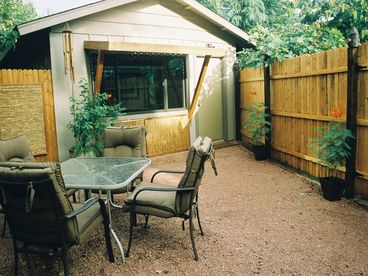
Ask Questions. I’m always surprised that most of our guests book online without ever asking a single question other than how much it costs. It may be that my description is thorough and our booking process answers their questions. But as a recent guest pointed out, she didn't ask questions, booked a property she thought was described as the same as another one bedroom because it seemed to have better views only to find the place is basically a furnished garage. From the photos the patio table appears to be on a nice gravel terrace. Surprise! The “yard” is also the driveway.

A few sharp prospective guests ask me questions about what they know make them comfortable during a trip. And they ask in such a way that I can’t slip around a shortcoming. For example, they don’t ask, “Is the hot water plentiful?” If I wanted to give a legal answer, I could safely say yes to that question no matter what the supply might be. What’s “plentiful” to me could be a 60 second rinse. A savvy prospective guest asks, “How many 5 minute showers would you say you could take before the hot water runs out?”

A guest who wants privacy asks, “Is anyone else on the property?” And, “I understand the view is great OUT of the windows, but I’m wondering, how easy is it for people to see IN?” You’d be surprised how many rental properties don’t have shades.

Swimmers get specific about how they want use the pool, “I want to swim laps in the pool, is it long enough for lap swimming without encountering ropes or kids in the pool?”

People who want peace and quiet ask, “How far is the property sited from the nearest highway?” Some use Google Earth and other mapping sites to help visualize the proximity to busy roads and other buildings and developments.

Cooks and those who don't want to spend time driving want to know,
“How far is the nearest grocery store?”

Parents and healthy home advocates ask, “What repairs have you made recently?” They know new paint, glue and other materials can outgas harmful toxins with not only an unpleasant smell, but chemicals that may damage your lungs. Asking about repairs and improvement is also a good way to find out the condition of the property. Owners who haven’t made any upgrades or changes in a few years probably have an overused or worn out property which is great for beach parties and college kids or a car load of pets, but may not be what you’re expecting. Ask how long ago the photographs were taken and what’s been changed since that time.

If a condo unit is in a complex, ask if you are guaranteed a particular unit. Find out which units have the best furnishings and how they compare with other units. Find out what housekeeping services are offered and the cost of more frequent services.

Last but not least, consider how you’re asked to pay for your vacation rental and get the details about deposits, damages and cancellation in writing, I post them on our website and we have an agreement letter. Home Away has tips on how to protect yourself when renting. The most common Internet scams involve cashiers checks. Don’t use them. Personal checks have more laws to protect people on both sides of the transaction. Better yet, use a credit card. While owners have to charge you more to cover the fees, if there’s a problem, you can dispute the charge with your credit card processor.

Wednesday, July 2, 2008

KT Tunstall's Green Travel Tips


In a recent interview, muscian KT Tunstall says her fave green travel practice is banning housekeeping from her hotel rooms, which saves water and toxic cleaning products. When I try that, the head housekeeper on the other end of the phone says, "Too bad, we're coming in, we have to check the rooms everyday," and the room gets cleaned anyway. Guess I need to be famous for that green tip to work.

What I found more interesting in about this chat was what the interviewer suggested as her green travel tip. Very sexy to a sun-worshiper like me.

For easygoing vacation tips for the not so famous, click here.

Sunday, June 29, 2008

Going For The Green: Thoughts on Greenwashing and Guilt


"These days, it seems just about every business is finding a way to go green, making it that much harder for well-intentioned consumers to distinguish companies with green products and services." --Entrpreneur Magazine

Green guilt, extreme green, green washing—the over-exposure to green messages leaves me feeling eco-fatigued. Businesses greenwashing in hopes of getting attention has created a backlash of cynicism against the green trend. What's an easy going green gal to do?

I confess, I'm not a purist, I find it to be rigid and confusing. Twenty percent of going green requires expensive, complicated, difficult choices about which most people disagree. I focus on the 80% that is clear and has impact instead of giving up because of the debatable 20%.

The way I see it, lots of people doing 80% makes a bigger difference than a few zealots doing 100%. I set a rational, reasonable example that people can follow, rather than condemn those who are unable or unwilling to adopt a perfectionist’s all-or-nothing approach.

Is that a cop-out? Is that nurturing? Economists say it is the law of diminishing return. The last 20% isn't worth the trouble it takes to go after.

Having said all that, I lose respect for businesses that claim to be green for common sense things like recycling. Lodgings that claim to be green because they ask guests to use less water or because they switched to flourescent light bulbs make me laugh. I give my business to those who assert their green-ness in writing with green policies. Certification from third parties that verify their claims offer credibility, and I have a few for my business just for that reason. But the field of listings is so crowded, most consumers can't tell one from the other so many green businesses don't bother.

Savvy consumers expect socially responsible practices from all businesses and won't just hand over their money because of marketing.

The Latest Trip

The latest guilt-trip seems to be going green. And now it's time for summer vacation--bringing more opportunities to feel guilty about the jet trails from flying, gas prices, and our "footprints," --click to measure yours in a fun quiz, no ads.

If you know me, you know what I say about guilt, "No way!" Here's how I'm making my summer vacation green and guilt-free:

Do what I can to save on gas when renting or buying a car and then don't sweat it. Hybrids do get better gas mileage, but the verdict is still out on how green they really are with their toxic batteries and carbon producing manufacturing. Enterprise Rentals let's you add carbon offsets to the price of your rental at booking. Offsets for my two week rental in Phoenix was just $2.90. Couldn't have been easier. This site has a gas mileage comparison tool and rates the 100 Top Green Cars. I pick a car with great gas mileage and GO.

Fly nonstop and fly during the day. Take off and landing takes most of the fuel used on a flight. Jet emissions do more damage at night.

Try these easygoing green vacation tips (ad-free pdf). Print out a few copies on recycled paper for fellow travelers or vendors who may need encouragement to go green or who may feel overwhelmed by all the environmental bafflegab.

Take FREE tours. I get locals to show me around for free through Couch Surf. This social networking site verifies users at three clever levels and connects you with people offering a place to crash or a cultural education of their area.

Friday, June 27, 2008

Florida Nature Vacations? Oxymoron or Best Kept Secret?


You've heard the jokes about Florida, "Why is it so hard to find a dentist in Florida? Because everyone just mails in their teeth."

Or as my Delray Beach friend, Buz likes to say, "It's not all the old people, it's their parents." And then there's the one that gets applied to the entire Gulf Coast, "It's not the heat, it's the stupidity."

I confess, in the past I have not been a fan of the Sunshine State. Growing up, my father called it, "God's Waiting Room," and insisted no respectable intellectual would set foot in the state. The rest of my family hated the heat and the tourist traps. But I was born in Fort Lauderdale and once I got past the population density and BLING of places like,"Boca Dunes Phase II," I discovered a natural wonderland that isn't crawling with tourists or 90210 Wannabe's--it is in northeast Florida. For nature and romance, nothing beats St. Augustine.

Ten reasons to Vacation in St. Augustine, FL:

1. The Old Florida Lifestyle. Easily found and has not been boxed like a commodity the way Cajun and so many other cultures have been commercialized. Details? Check out Minorcans, especially their food and plants on your walking tours. You can also email me and I'll send you a map and itinerary for a self-guided culinary tour.

2. Charm. The oldest US city settled by Europeans reminds me of a tiny Spanish village washed up on a golden beach. No cars, just a walkable town with authentic history and architectural interest.

3. It's not as hot as the NE. It's cooler than most places in the NE and Southern US in summer. You won't miss the sweltering heat and air pollution from areas near Wash., DC, south Florida, or Georgia. Breezes from the ocean keep it cool, low population density and abundance of parks, preserves, and green space keep the air clean. Details? Compare the zip codes for air quality.

4. You don't even have to leave your vacation spot to get uplifted. Sunrise from the balcony of the Riverview a vacation rental, is amazing. You can watch the yachts and dolphins cruise the Intracoastal. When you book your vacation spot, be sure to SKIP the big box condos on the beach and get an updated vacation rental in a quiet location.

5. Learn about the birds and bees. In just six days I saw swallow-tailed kites, broad-tailed hawks, a ruby throated hummingbird, eight kinds of terns, three adolescent, pileated woodpeckers, red-headed and red-bellied woodpeckers, marsh wrens, wood thrushes, wading birds, a Chuck-Will's-widow, and a nighthawk.

6. You're 16 minutes from one of the best beaches in the world, Crescent Beach boasts an inlet and a beach wide enough to walk or bike for miles.

7. St. Augustine Beach boasts an undeveloped beach, Anastasia Park. Even if you don't like beaches, the natural wonder, history and sheer beauty might give you the inspiration to take a long walk or just nap on the sand.

8. Alligator Farm Park offers thrills and education. The nesting birds in the rookery make the trip worthwhile for even the most anti-zoo family members. Wild birds flock there to nest in the safety of the gator pens, no predators climb the trees to eat those eggs, not with the gators at the bottom of the trees.

9. Guana River State Park. Hiking trails to historic Indian ruins, canoeing, and fishing. A 2,400 acre coastal park at the tip of 12,000 acres of conservation and recreational areas. Shell mounds, over 226 species of birds, bobcats, sea turtles and other endangered animals make this a world-class nature preserve.

10. More Beautiful Parks. Princess Park for horseback riding, Old Florida flavor, boating, and beautiful flowers. Moses Creek for eagles nests, letterboxing and kayak or canoeing. Crystal River, Manatee Springs, Cedar Key, the list goes on...

Friday, June 13, 2008

Summer Travel Deals on Rental Cars

Many rental car companies have been running specials as steep as 50% off regular rates. The bad news is these rate specials end in June and most companies plan to increase rates over the summer.

There are a few exceptions. Hertz has a fleet of gas saving, green vehicles. To promote the new fleet, it will offer $25 off a weekly rental on these eco-cars this summer. If you're calling, use the promo code 113503 for the Green Collection.

And you can save 10% if you reserve with Alamo on its Web site and pre-pay with a credit card.

Click here for ad and guilt free green car rental tips and easygoing green hiking tips.

Get Away and Still Save Money: Staycation Trend


The hottest summer vacation? "Staycations" where you stay close to home, visiting sites within a day's drive or in your home town. Vacationing close to home or even staying home, saves money on air fare and cuts carbon.
Vacation rentals outside of major cities make a good choice for spending smart if you can't stay with friends. You can reach destinations like Sedona in a day from Vegas, Phoenix, Tucson, and nearby states. A day's drive takes folks from Atlanta to posh locations in northern Florida.
If you're staying home for your vacation, a good way to return to work more rested is forget the chores. Those who choose to stay at home for their staycation tend to end up doing projects and tasks from their to-do lists. If you're going to skip the packing, airport check in lines, and traffic, you may want to skip the chores too.
Get tips on how to negotiate prices with vacation rental owners from the Wall Street Journal. Check rate specials the big vacation rental websites like VRBO (Vacation Rental By Owner) and HomeAway, which owns most of the smaller vacation rental websites, including VRBO. Free vacation planning available when you book at ecoLuxury Lodging.com, you'll have a personal conceirge.

Friday, May 23, 2008

Gimme a Break, Coffee Break, that is...

Sometimes I want to throw my hands up at all the contradictory and confusing information out there about what's healthy and what's not. "Eat organic, eat local--vegetarian isn't healthy for you, but it is for the planet--cut fat, eat fat."

I make it easy on myself and hopefully, the planet by doing what I can the majority of the time and forgetting about the rest of it. I'm not 100% anything all the time. I eat organic when I can, but I don't obsess about it. I figure everything in moderation means less stress for me and my traveling companions seem to appreciate it, too.

Organic coffee is one thing I skip, especially given the cost of coffee. Buying organic foods usually means less exposure to pesticides and fertilizers, but coffee is one exception. The roasting at high temps removes toxic residue in conventional beans according to Sandra Marquardt, Organic Coffee Collaboration spokesperson. This means there's no real health benefit to choosing organic over regular. But choosing organic it does support environmentally sound harvesting and farming practices.

Wednesday, May 14, 2008

Tonic for the Soul--Mothering is our Nature

On Mother's Day, I wandered out on the mudflats of the river to watch a family of raccoons scamper on the shoreline. It was a tonic for my soul. Breathing in the wonder of the outdoors nurtures me. When I am low, I find solace in nature. When I am outside, I am more myself. Nature writer Diane Ackerman describes our need for the tonic, "There are noble reasons for protecting the environment...but we also need a healthy, thriving, bustling, natural world so that we can be healthy, so that we can feel whole."

Right there on the mud flats, I made a commitment to take care of myself as well as I take care of others. "Taking care of yourself is your right and your responsibility," says Vimala McClure. And it is said, she who values her body more than dominion over the empire can be given custody of the empire. I want to value my soil and sea, as much as I do the bodies of others.

And in doing so, I cannot help but wonder how much richer, cleaner, kinder the planet would be if mothers everywhere started caring for themselves in this way--nurturing the mother, the nature in us all.

Monday, May 12, 2008

Dictionary for Eco Newbies

Eco. Prefix referring to ecological terms.

Eco-tourism.
Defined in Wikipedia as a form of tourism appealing to ecologically and socially conscious individuals; focuses on personal growth and learning new ways to live on the planet; typically involving travel to destinations where flora, fauna, and cultural heritage are the primary attractions.

Responsible ecotourism includes programs that minimize the negative aspects of conventional tourism on the environment, and enhance the cultural integrity of local people. Therefore, in addition to evaluating environmental and cultural factors, an integral part of ecotourism is in the promotion of recycling, energy efficiency, water conservation, and creation of economic opportunities for the local communities.

Ask what makes the destination "eco" or green. Green washing is common, not only because people want to jump on a hot trend, but most often because they're uninformed. My properties are certified by the Green Vacation Hub which has fair, but deeply green certification standards. You can use their list to ask businesses about their green policies or initiatives. Just being in the jungle or have a recyling been doesn't make it "eco" in my book.

Eco-luxury. A high comfort, low impact way of life promoted by yours truly. In my home it means a natural home that is easy on me & the environment WITHOUT compromising my gracious standard of living. We use only fragrance free cleaning products, furnishings & building materials. Low-toxin environment, no harmful out-gassing, no chemicals. I'm not talking yurt with a composting toilet. I don't wear earth shoes, I eat meat (occassionally) and I'm into my "soft surroundings."

GHG. Green House Gases such as Carbon Dioxide (CO2), the leading green house gas contributing to climate change. Burning fossil fuels releases carbon into the atmosphere. During the combustion process, the fossil fuels are turned into carbon dioxide.

Green or Sustainable Design, Green Building, Green Remodel. The goal of green building is to minimize the impacts on people's health and the environment and the efficient use of energy, water and materials during construction. For homes, this includes architecture, landscape and renewable resources. For example, a green home might use a cistern to capture grey water from indoors and rain water outdoors. This prevents polluted dishwater, laundry wash water, and runoff from pavement from entering the streams, lakes, or ocean . The cistern water is then used for drip systems in landscaping to water plants.

IAQ. Indoor Air Quality. Mold, bacteria, allergens and carbon monoxide are among the many elements that can negatively affect a home's IAQ. Cleaning products, fabric softeners, air fresheners, scented candles, and other household products with synthetic fragrances usually contain harsh chemicals, many of which are carcinogenic-most of which irritate respiratory systems.

The EPA reports that about 70% of indoor air is more polluted than the air outside. To help you evaluate your exposure to household pollutants and find tips for improving indoor air quality see the information at the American Lung Association. Switch to unscented cleaners or better yet, replace them with white vinegar or baking soda and water.

LEED.
Stands for Leadership in Energy and Environmental Design, which is a rating system created by the U.S. Green Building Council. LEED awards points based on fulfilling requirements in six major areas: Sustainable sites, water efficiency, energy and atmosphere, materials and resources, indoor environmental quality and innovation and design. New buildings can earn certified, silver, gold or platinum awards based on how many points it achieves. LEED is mostly used in new construction and to rate a project on its level of greenness and does not apply to remodeling. A few states have green certified remodeling certifications based on LEED criteria. Even if contractors in your state cannot be LEED certified for remodels, they can use the project checklists. Items included would be:

  • Recycling or reusing packaging and materials removed from the home during the remodel instead of adding to the landfill.
  • Use of wood furnishings and finishes that are either recycled, reclaimed, or from harvested in ways that did not threaten old growth or rain forests.
  • Water Efficiency. Low volume toilet and shower head. Showerheads that remove chlorine. Most chlorine exposure comes not from drinking water, but from our skin while bathing. Use filtered water in the shower and you may notice your hair color lasts longer (if you get it from a bottle).
  • Energy Efficiency. Use Energy Star rated appliances and heating, air conditioning units.

For more easy tips download 16 Easy Ways to Green Your Home.

Slow Movement/Slow Food/Slow Travel. The cultural initiative, SLOW FOOD has burgeoned into a whole way of life known as the Slow Movement, which emphasizes connection — connection to food, connection to families and, in the case of travel, connection to local peoples and cultures.

Slow travel is not so much about the transportation on your vacation as it is your mindset. It can mean renting a cottage for a few weeks or hiking and biking while at your destination to get a feel for the land. A slow itinerary gives you a break from the blurring pace of American or business life. Slow travel is also kinder to the environment and your wallet, as vacation rentals are less expensive than hotels and resorts with comparable amenities. Staying in one place often reduces transportation costs and by cooking instead of eating out for every meal, you save even more.


VOC. Volatile Organic Compounds found in many building materials such as dry wall, paint, wood, glue, or carpet, paints and finishes. To avoid them, look for construction or remodeling from reclaimed or untreated wood, upholstered furniture that has long since out-gassed sizing and other chemicals, no carpeting as most carpet padding and glue contains toxins, including formaldehyde. Xenoestrogens and nanoparticles are the latest offenders. More on those later or send me links to articles about it! 5/10/08 by Dana Ghermine Mayer

Tuesday, January 1, 2008

Living on the Edge

By Guest Blogger, Fran Palmeri
Nature Photographer

When I moved to Florida I thought it was kind of cute that yard birds were the live kind. Then I realized birds were in people’s yards because they had nowhere else to go. They’re forced to coexist with humans on chemically treated lawns, mulch, concrete and asphalt. Sandhill cranes take up residence on pesticided sod by an algaecide treated pond, wood storks hang out in a dumpster behind a restaurant, and ibises nest in a mountain of debris on a construction site. Dumps are another common habitat for birds and other creatures with no where else to feed.

Our fellow creatures often live life on the fringes of developed areas. Our ignorance, lack of concern, greed, and short sightedness has forced wildlife to make do with hideous substitutes for all that is natural, that is real, that is YES, to paraphrase Cummings.